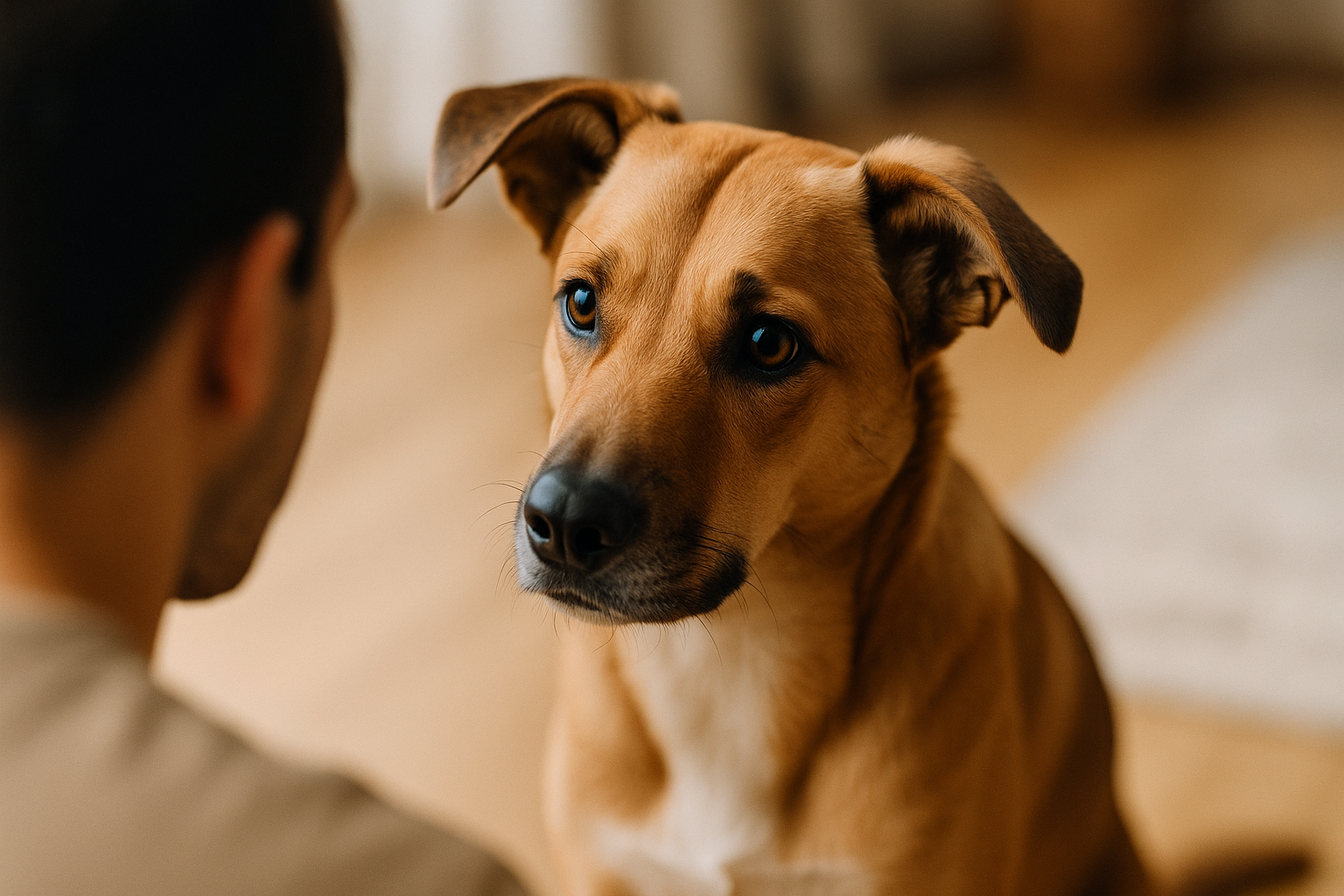
Your dog just lowered her head, pinned her ears back, and won’t make eye contact. Is she feeling guilty about the chewed-up shoe? Actually, no. What you’re interpreting as guilt is likely fear or anxiety about your reaction. This common misunderstanding highlights why learning to read dog body language accurately matters so much. When you understand what your dog is really communicating, you strengthen your bond, prevent behavioral issues, and create a happier, more trusting relationship.
Dogs communicate primarily through body language rather than vocalizations. Every tail position, ear angle, and facial expression conveys specific emotions and intentions. The challenge is that these signals can be subtle, context-dependent, and easily misread by humans who apply their own emotional interpretations. By learning to observe your dog’s complete body language rather than focusing on isolated signals, you’ll discover a whole conversation you’ve been missing.
The Importance of Context in Canine Communication
Before diving into specific body language signals, you need to understand that context determines everything. A wagging tail doesn’t always mean happiness, and a yawn isn’t necessarily about being tired. The same signal can mean completely different things depending on the situation, the dog’s overall body posture, and what’s happening in the environment.
Consider tail wagging as an example. Most people assume any tail wag indicates a friendly, happy dog. However, experts on canine body language explain that the speed, height, and direction of the wag all communicate different emotions. A slow, low wag might indicate insecurity or uncertainty. A high, stiff wag often signals arousal or potential aggression. A loose, full-body wag with the tail at mid-height typically does mean happiness and friendliness.
This is why reading your dog’s entire body matters more than focusing on any single signal. Look at the ears, eyes, mouth, tail, and overall posture together. A dog with a wagging tail but tense body, whale eyes (showing the whites), and pinned-back ears is not friendly or relaxed despite that tail movement. The complete picture tells you the dog feels conflicted, stressed, or potentially threatened.
Understanding Stress and Anxiety Signals
Dogs display stress through dozens of subtle behaviors that owners often overlook or misinterpret. These “calming signals” or “stress signals” are your dog’s way of self-soothing, communicating discomfort, or trying to defuse a tense situation. Recognizing these signs early prevents stress from escalating into fear or aggression.
Common stress signals include yawning when not tired, lip licking when no food is present, panting when not hot or exercised, and excessive shedding. You might also notice your dog turning her head away, refusing eye contact, freezing in place, or moving in slow motion. These behaviors indicate your dog feels uncomfortable and needs space or reassurance.
According to veterinary behaviorists who study canine communication, one particularly important stress signal is the “whale eye,” where your dog turns her head away but keeps looking at something from the corner of her eye, exposing the white part. This signal often appears when a dog feels threatened but doesn’t want to engage in direct confrontation. If you see whale eye, give your dog more space and remove whatever is causing the stress.
Paw lifting is another frequently misunderstood signal. While it can indicate playfulness or anticipation during training, in other contexts it signals uncertainty or anxiety. When combined with other stress signals like a lowered body, tucked tail, or pinned ears, a lifted paw clearly communicates discomfort. Just like maintaining a calm environment helps with your dog’s overall wellbeing, understanding when they need homemade nutrition support can be valuable – check out our guide to healthy homemade treats your dog will actually love for ways to reward calm, relaxed behavior.
Recognizing Confident and Relaxed Body Language
A confident, relaxed dog looks completely different from a stressed or fearful one. Learning to recognize relaxed body language helps you identify when your dog feels safe and comfortable, which is the ideal state for training, socialization, and bonding activities.
A relaxed dog carries her weight evenly distributed on all four legs, with a neutral or slightly forward body posture. The tail hangs in a natural position for the breed – not tucked or rigidly raised. Her ears sit in their natural resting position, not pinned back or hyper-alert forward. The mouth appears soft and may be slightly open with the tongue visible, sometimes called a “soft eye” or relaxed facial expression.
The eyes themselves provide tremendous information. Soft, almond-shaped eyes with normal pupil size indicate relaxation. The dog makes casual eye contact without staring intensely. Her facial muscles look loose rather than tense, and she might engage in normal behaviors like sniffing around, casual observation of her environment, or settling down for a nap.
You’ll also notice that a truly relaxed dog moves fluidly and naturally. There’s no tension in her body, no hesitation in her movements. She might perform a full-body shake to release any residual stress, stretch comfortably, or roll onto her back for a belly rub. These behaviors indicate complete trust and comfort in her environment.
Interpreting Fear and Defensive Postures
Fear-based body language requires immediate attention because fearful dogs can quickly escalate to defensive aggression if they feel cornered or threatened. Understanding these signals helps you intervene before fear turns into a bite incident.
A fearful dog makes herself appear smaller by lowering her body, tucking her tail tightly between her legs, and pinning her ears flat against her head. She might crouch or crawl with her belly low to the ground. Her weight shifts backward, away from whatever threatens her, and she might tremble or shake. Resources like comprehensive guides on understanding dog behavior emphasize that these signals mean your dog needs distance from the fear trigger, not forced exposure or reassurance that might reinforce the fear.
Many fearful dogs also display avoidance behaviors like turning away, refusing to move forward, or attempting to escape. Some freeze completely, which people sometimes mistake for calmness. A frozen, immobile dog is actually highly stressed and may be preparing for a defensive response if the threat doesn’t back off.
Watch for “piloerection” – when the hair along the spine or shoulders stands up. While this can indicate arousal or excitement in some contexts, combined with other fear signals it shows high stress levels. Similarly, excessive drooling, dilated pupils, and rapid panting all indicate fear-based physiological responses.
If your dog displays these signals, never force interaction with whatever is scaring her. Create distance, remove the trigger if possible, and work with a professional trainer on gradual desensitization if the fear relates to common situations your dog must encounter regularly.
Reading Play Behavior Versus Aggressive Intent
Distinguishing between playful roughhousing and actual aggression confuses many dog owners, especially when dogs play-fight with growling and teeth-baring. Understanding the difference prevents unnecessary intervention during healthy play while keeping your dog safe during genuine conflicts.
The play bow – front end down, rear end up – is the universal canine invitation to play. During healthy play, dogs frequently perform play bows to signal “this is just fun” even when the interaction involves wrestling, chasing, or mock fighting. You’ll notice the dogs take turns being the chaser and the chased, the winner and the loser. They self-handicap, with larger dogs allowing smaller ones to “win” sometimes.
Play faces look loose and relaxed even during exciting games. The mouth stays open in that relaxed position, movements appear bouncy and exaggerated rather than efficient and calculated, and the dogs willingly re-engage after brief pauses. Healthy play includes frequent breaks where dogs might sniff around, grab a drink of water, or perform a play bow before resuming.
In contrast, aggressive interactions show tense bodies, direct stares, stiff movements, and no role reversals. One dog consistently dominates while the other tries to escape or shows fear signals. The interaction might start as play but cross into bullying when one dog no longer wants to participate but the other won’t allow them to leave. Watch for one dog constantly pinning another, refusing to respond to cut-off signals, or escalating intensity despite the other dog’s stress signals.
Healthy play should look fun for both participants. If one dog consistently shows stress signals, hides, or tries to avoid the other dog, the interaction isn’t play anymore. Separate the dogs and give the reluctant one a break.
Tail Positions and What They Really Mean
The tail acts as one of the most expressive communication tools in your dog’s body language arsenal. However, breed differences significantly affect how you interpret tail signals. A breed with a naturally curled tail communicates differently than one with a long, straight tail, so always consider your dog’s baseline tail carriage.
A tail held at natural height for the breed, with loose, sweeping wags, generally indicates positive emotions like happiness, friendliness, or excitement. The wider and more full-bodied the wag, the more positive the emotion. Research has even shown that dogs wag more to the right side when experiencing positive emotions and more to the left when experiencing negative ones, though this subtle difference is hard to observe in fast-wagging tails.
A tail tucked tightly between the legs signals fear, anxiety, or submission. The dog is trying to make herself smaller and less threatening. Some dogs tuck their tails so tightly that it almost touches their belly. This extreme tucking indicates high stress levels requiring immediate intervention to help the dog feel safer.
A high, stiff tail held rigidly vertical or slightly forward indicates high arousal and potential aggression. This tail position often accompanies other arousal signals like forward-leaning body posture, intense staring, and raised hackles. The tail might vibrate or wag in short, fast movements at the tip only. This is not a friendly dog – this is a dog intensely focused on something and potentially preparing to act aggressively.
A low wagging tail indicates uncertainty or insecurity. The dog isn’t necessarily fearful enough to fully tuck the tail, but she’s not confident either. You might see this when your dog encounters something new or mildly concerning but hasn’t decided yet whether it’s threatening. Provide calm reassurance and let your dog investigate at her own pace.
Facial Expressions and What the Eyes Tell You
Your dog’s face provides incredibly nuanced communication once you learn to read the subtle changes in expression. While dogs don’t smile the way humans do, they absolutely use facial muscles to communicate emotional states.
The eyes reveal tremendous information. Soft, relaxed eyes with normal pupil size and a loose gaze indicate calmness. Hard, intense staring signals a challenge or threat. When dogs want to avoid conflict, they use “soft eyes” and look away frequently, offering brief glances rather than sustained eye contact.
Pupil dilation can indicate fear, excitement, or arousal depending on context. Dilated pupils combined with other fear signals mean your dog feels threatened. Combined with forward body posture and intense focus, dilated pupils indicate arousal and potential aggression. The whites of the eyes (whale eye) appearing when your dog looks at something from the corner of her eye signals stress and discomfort.
The mouth and lips also communicate clearly. A relaxed, slightly open mouth with the tongue visible indicates comfort. Lips pulled back to expose teeth, especially the front teeth in a vertical display, signals a warning or threat. However, some dogs display a “submissive grin” where they pull their lips back horizontally – this looks alarming but actually signals deference and friendliness in certain dogs.
Tension in the facial muscles makes the face look harder and more rigid. You might notice the forehead wrinkles, the whisker bed pushes forward, or the ears change position. These micro-expressions often appear before more obvious body language signals, giving you early warning of changing emotional states.
Putting It All Together: Reading the Whole Dog
Mastering dog body language requires practice observing complete signals rather than isolated behaviors. Start by watching your own dog during clearly positive situations – playing with a favorite toy, enjoying dinner, relaxing during a belly rub. Notice every detail of her relaxed body language so you recognize it instantly.
Then observe your dog during mildly stressful situations like nail trimming or greeting an unfamiliar person. Compare how the body language differs from her relaxed state. You’ll start recognizing the subtle shifts that indicate increasing stress before it becomes obvious fear or aggression.
Practice with other dogs too when you have opportunities. Watch dogs at the park, in training classes, or during walks. The more dogs you observe, the better you’ll become at reading the universal signals while also recognizing individual differences and breed-specific variations.
Remember that body language exists on a spectrum. Dogs rarely go from completely relaxed to fully aggressive instantly. They show progressive signals indicating increasing stress or arousal. When you learn to recognize the early, subtle signals, you can intervene appropriately before situations escalate. This might mean creating distance from a trigger, ending an interaction, or simply giving your dog the space she needs to feel comfortable again.
Understanding your dog’s body language transforms your relationship from one based on guesswork to one built on genuine communication. You’ll respond more appropriately to your dog’s needs, prevent stressful situations, and build the deep trust that comes from being truly understood. Start observing today, and you’ll be amazed at how much your dog has been telling you all along.
Leave a Reply